Pots and planters can represent one of the fastest-moving, highest-turnover areas of a garden centre. However, with a vast choice of materials, styles, colours, shapes and sizes to manage, it is also a category that relies heavily on effective merchandising.
A strong display can transform pots and planters into an inspiring retail destination, helping customers navigate the choice available, visualise products in their own gardens and ultimately buy with confidence. An overcrowded, depleted or difficult-to-shop display, however, can quickly become a barrier to purchase.
With a nationwide merchandising team supporting garden centres throughout the year, Mims understands what makes a pots and planters display work.
Leading the team is Head Merchandiser Adrian Haslam, who has represented Mims across East Anglia for the past 18 months and previously worked for another pots and planters supplier. Alongside overseeing new customer set-ups, Adrian supports the wider team with display standards, product presentation and merchandising best practice.
Here, Adrian and the wider Mims team share their advice for creating displays that attract attention, remain easy to shop and support stronger sales.
1) Start with the customer
Before moving a single pot or planter, the Mims team looks at the display through the eyes of the shopper. Is it immediately clear what is available? Can customers see the different sizes, styles and finishes? Are prices visible? Most importantly, can someone select the product they want without having to move half the display first?
Good merchandising should make a potentially complex category feel simple. It should help customers find what they are looking for quickly, while also introducing them to colours, styles and planting possibilities they may not previously have considered.
Adrian says: “Our merchandisers understand customer flow and use that knowledge to create displays that are eye-catching, visible and safe. Every pot size should be easy for the customer to see, reach and shop.”
2) Make every display shoppable
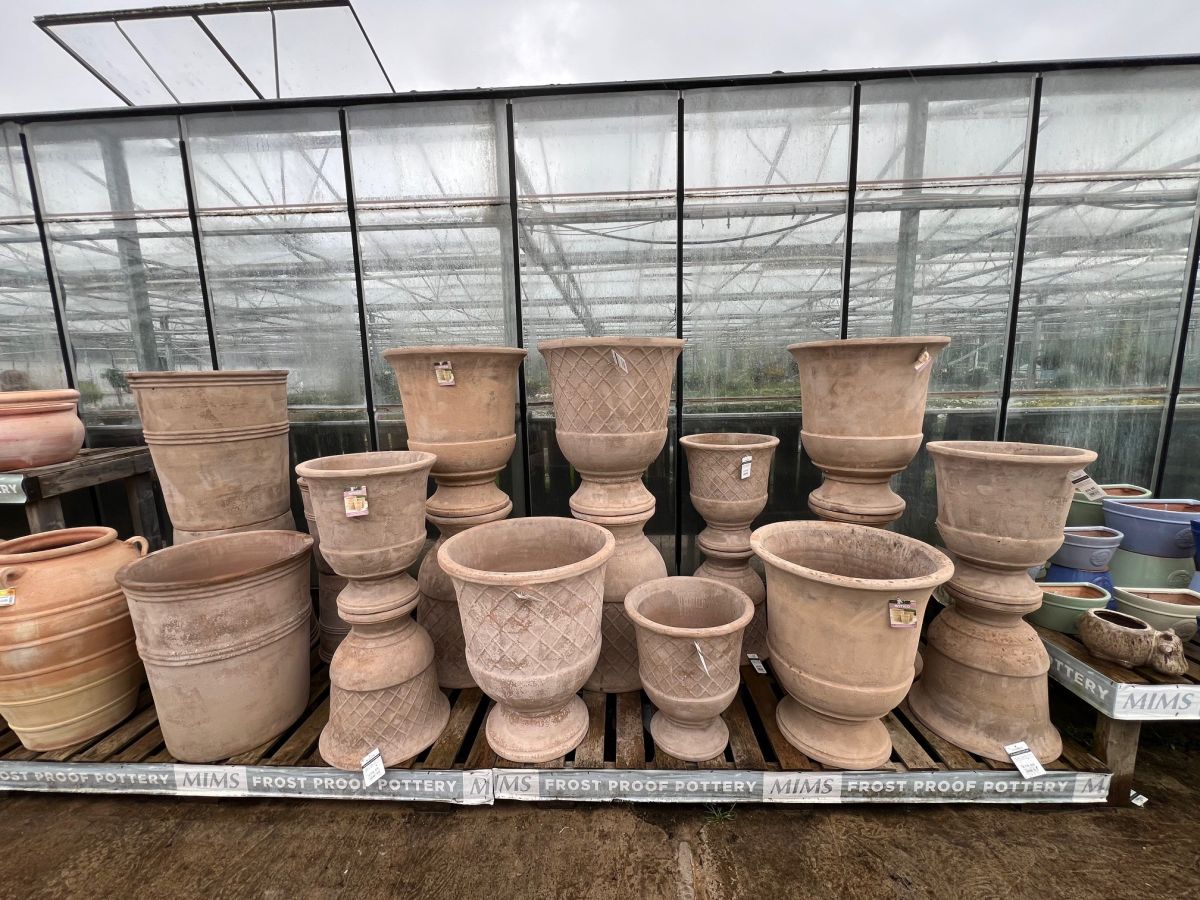
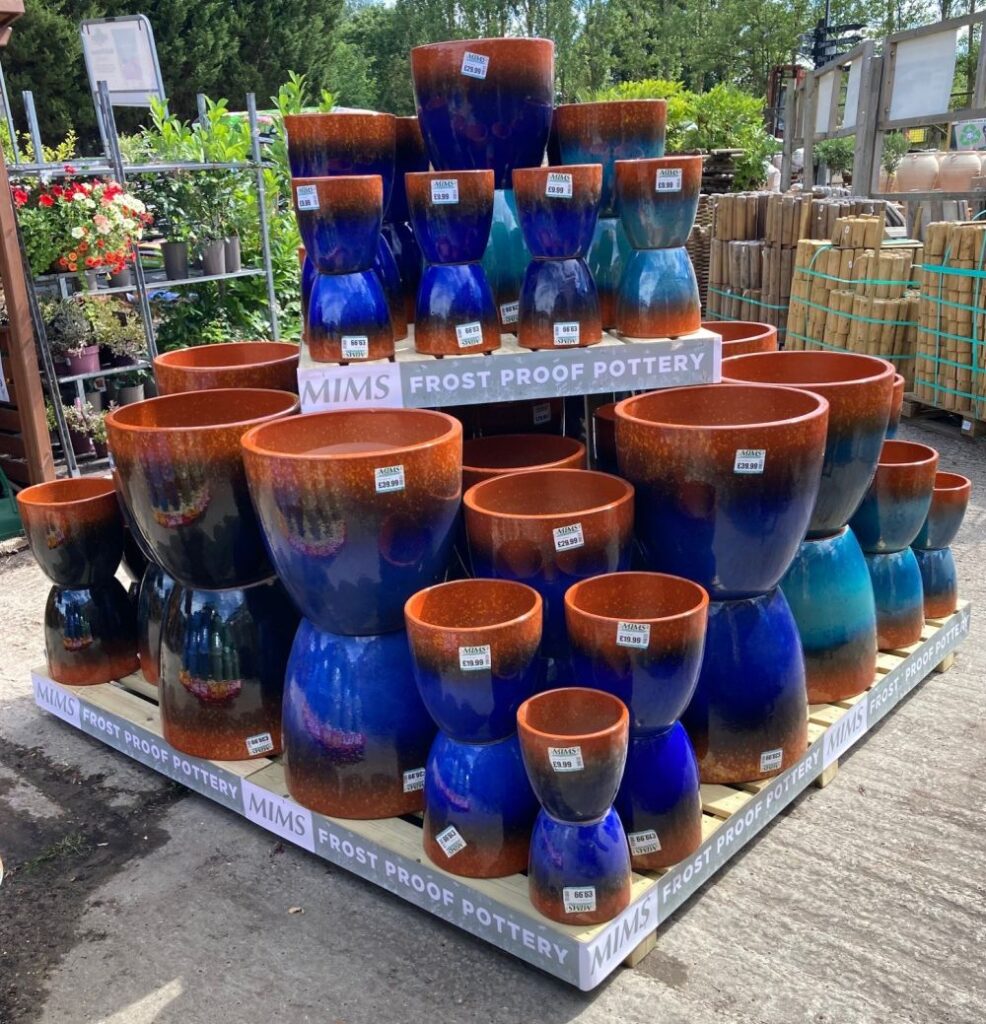
Pots and planters displays can quickly become difficult to navigate, particularly when different sizes, shapes, colours and collections are mixed without a clear structure. Grouping complementary products by collection, material, style, colour or size creates a more coherent display. It allows customers to understand the options available, compare products and identify the right planter for a particular space or planting scheme.
The Mims team also avoids overcrowding benches or nesting pots so deeply that shoppers are reluctant to retrieve them. John Bowie, who covers northern England and the Scottish Borders for Mims, says: “Products need to be easy to shop. Customers should not have to move an entire display to select the pot they want, and prices should always be clearly visible.”
This is particularly important because pots and planters are often inspiration-led purchases. They need to catch the customer’s attention and help them imagine how the finished product could look at home.
3) Focus on presentation, placement and promotion
Where pots and planters are positioned can be just as important as the products themselves. Strong displays should occupy visible, well-trafficked areas of the garden centre rather than becoming lost around the edges of the retail space.
Larger statement planters can create height and provide an immediate focal point, while smaller coordinating products can be arranged around them to demonstrate the breadth of the collection.
Displays should offer sufficient variety to create interest without becoming visually confused. Keeping individual collections or complementary designs together creates a stronger overall impression and makes the range easier to understand.
Thoughtful planting can also bring a display to life, helping customers visualise the finished effect and creating opportunities for additional plant, compost and accessory sales. “Presentation, placement and promotion all matter,” Adrian explains. “The pots need to be in the right area of the store, presented strongly and supported by promotions that customers can clearly see.”
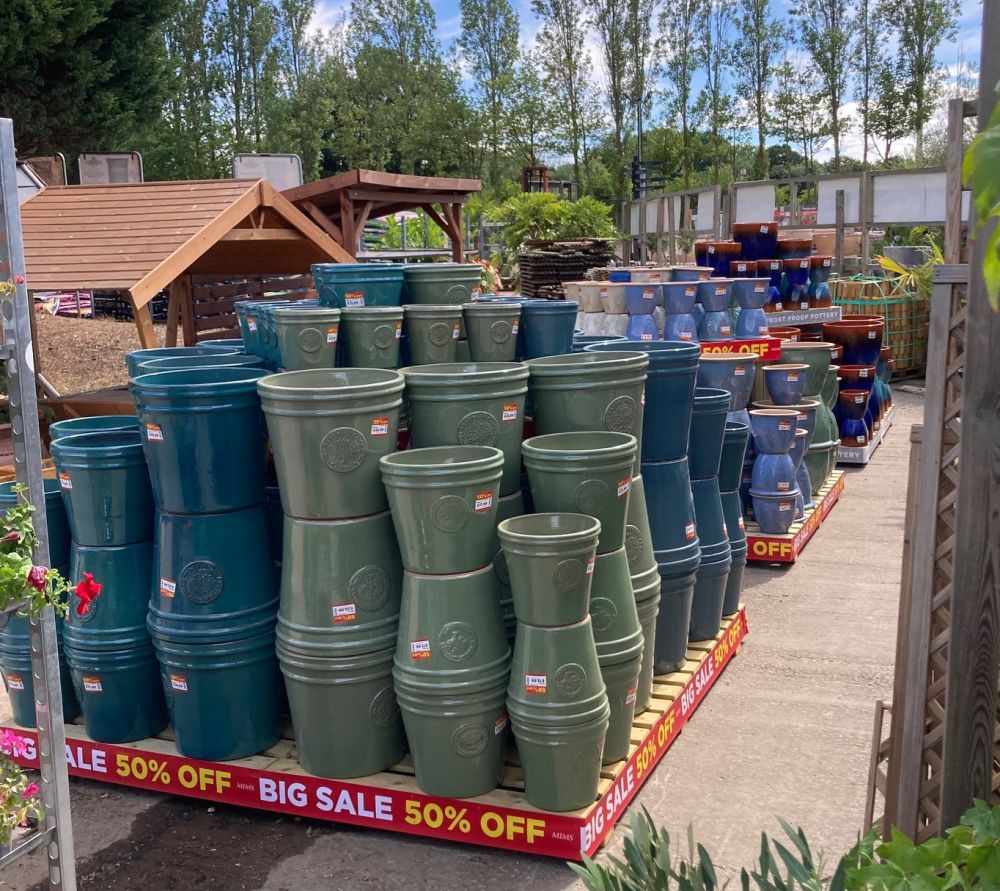
4) Keep fast-moving stock full and fresh
As a high-turnover category, pots and planters require regular attention. Gaps can appear quickly, popular sizes may sell through first and a display that looked strong at the beginning of the week can soon become depleted.
A typical Mims visit begins by checking where stock has been delivered, then reviewing what has sold and how much shopfloor space is available. The merchandiser can then put out the new delivery, replenish gaps, condense depleted ranges and tidy the wider area before showing the completed work to the garden centre manager.
Adrian says: “We look at which pots have sold well, what stock is available and what space we have to fill. The aim is to get the maximum appropriate level of stock safely onto the shopfloor, so customers have good availability without the display becoming difficult to shop.”
Regular visits help keep displays tidy and attractive, maintain availability, give successful lines the space they need and ensure current promotions remain prominent. A refresh does not always require a complete rebuild. Grouping the remaining stock from depleted lines can release valuable bench space, while repositioning bestselling or newly delivered collections can quickly restore balance and impact.
5) Make pricing impossible to miss
Missing or unclear pricing creates an unnecessary barrier to purchase. Mims merchandisers assess the overall condition of each display, check for stock gaps or damaged products and ensure prices are clearly visible. Point-of-sale materials, promotions and bench branding can then be used to create a professional and consistent finish.
This attention to detail makes a busy category easier to navigate and ensures customers have the information they need to make a purchasing decision without searching for assistance.
6) Save time for garden centre teams
Pots and planters are a particularly physical category to merchandise. Moving, unpacking and arranging heavy products can place considerable demands on garden centre employees, especially during peak trading periods.
Mims merchandiser Ben Evans explains: “We work on hundreds of displays and understand which layouts work best for the products we are putting out. It is heavy, physical work, so the service also saves garden centre teams a considerable amount of time and effort.”
Rather than imposing the same layout in every store, Mims merchandisers consider the customer base, available space, stockholding, sales performance and wider retail environment. “Every location is different,” Ben adds. “We look at the space, the stock that is already there and what has been selling before deciding how best to approach the display.”
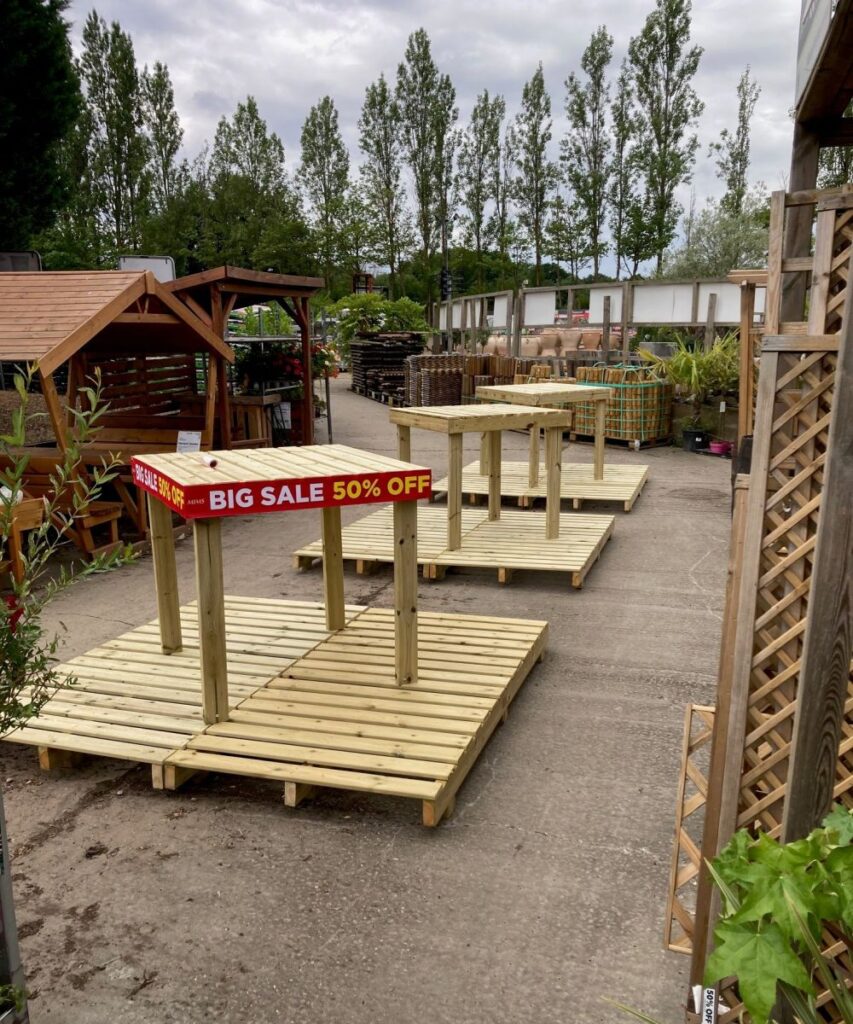
7) Turn a category into a destination
For Adrian, one of the most memorable transformations was at Roots and Shoots Garden Centre, where half of an existing gravel area was turned into a completely new Mims pots and planters department. “I enjoy transforming a tired area of a garden centre into a fresh, vibrant pot display,” says Adrian. “It is particularly satisfying to revisit, see how much has sold and know the garden centre is happy. Showing a customer the finished display and seeing that they love it gives you real pride in the work.”
The impact of effective merchandising can also be seen at Leamside Nurseries in County Durham, where John helped install approximately 30 new benches in a revised configuration. The project created a substantial pots and planters destination that has since generated considerable sales.
Ultimately, the Mims difference comes from understanding which products sell well, where they will perform best and what a strong display should look like, then having the practical skills to deliver it.