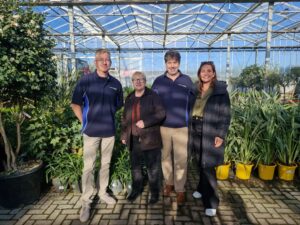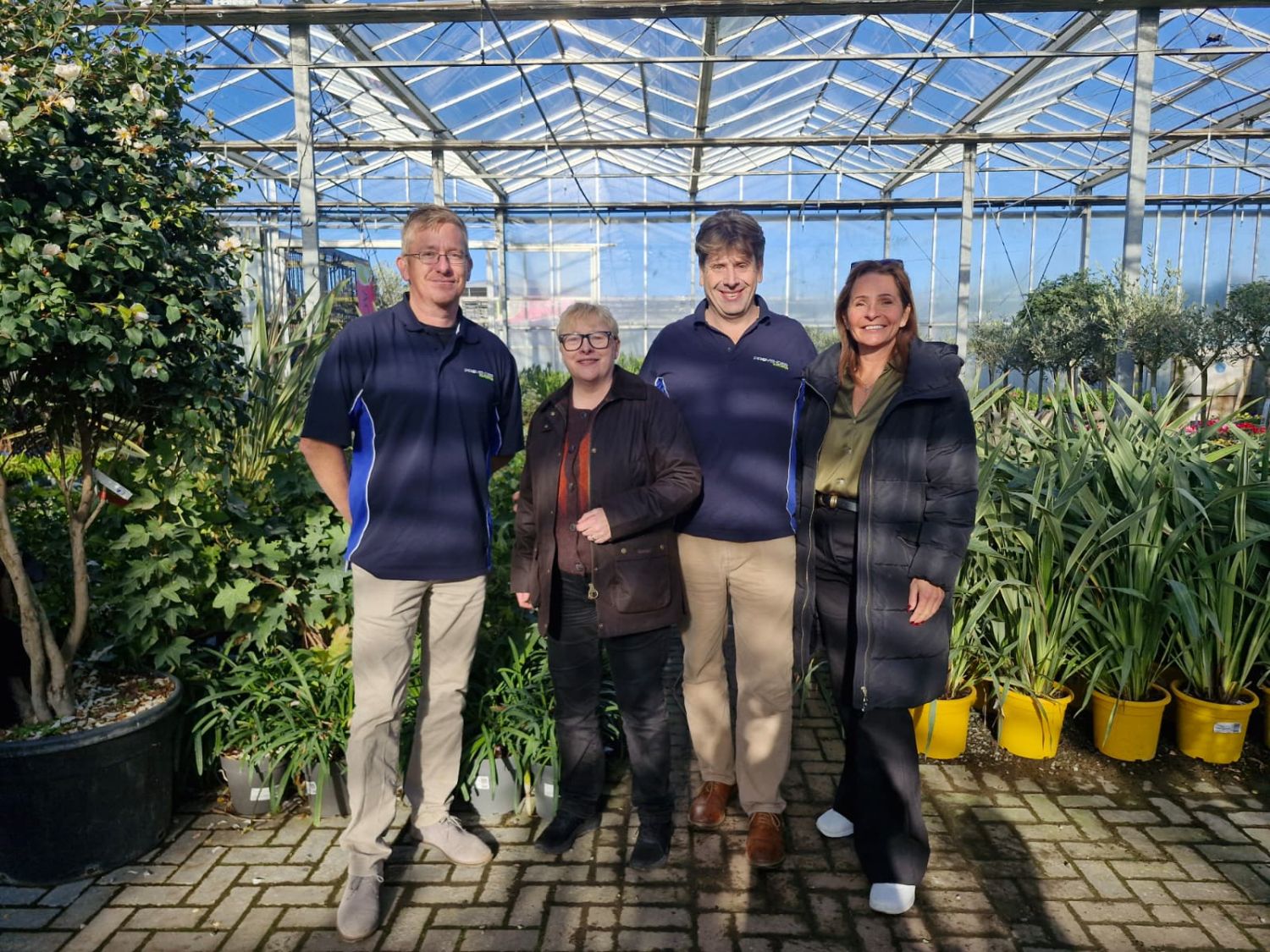
Dame Angela Eagle, Secretary of State for Environment, Food and Rural Affairs (the Environment Secretary), visited Provender Nurseries, a Horticultural Trades Association (HTA) member, in Swanley, Kent, on 12 November to hear first-hand about the opportunities and challenges facing the environmental horticulture sector.
Just one week before the UK-EU Summit in Brussels on 20 November, the visit offered an opportunity to discuss the proposed UK-EU Sanitary and Phytosanitary (SPS) agreement, the practical impact of current border arrangements, and the changes needed to make trading plants and plant materials with the EU simpler, cheaper, and more predictable.
The Environment Secretary was joined by HTA Chief Executive Fran Barnes and the Provender Nurseries team. Richard McKenna, Managing Director of Provender Nurseries, led the tour, including a visit to the business’s designated Control Point, where plant consignments arriving from the EU are received and inspected. This demonstrated the processes and costs involved in importing plants under current border arrangements.
Fran Barnes, Chief Executive of the HTA, said: “Having the Environment Secretary visit one of our members is significant recognition of the importance of environmental horticulture and the contribution our sector makes to the UK economy, environment, and people’s lives.
“With the UK-EU Summit just a week away, the SPS agreement was central to our discussions. It is a very positive step towards arrangements that simplify plant trade, reduce unnecessary costs and delays, and support businesses trading in both directions. The current system has created significant additional costs and complexity for our members. The HTA estimates that border and compliance requirements have cost the sector around £60 million over the last 12 months alone.
“We also stressed the importance of the practical easements we want to see now, rather than businesses having to wait until the full agreement takes effect. There are opportunities to reduce unnecessary checks and charges and deal more pragmatically with paperwork issues and inspections, without compromising plant health and biosecurity.
“Beyond trade, we discussed pressures including water, climate change, and Extended Producer Responsibility. It was also pleasing to hear the Secretary of State acknowledge the vital role of horticulture and her personal passion for it. She is particularly keen on seeing the outcomes of the forthcoming Horticulture Growth Strategy. Environmental horticulture needs stronger representation across government, and the strategy is an important opportunity to recognise the scale of our sector and set a clear direction for its future growth.”
The UK imports around £794 million of plants and plant material from EU countries, accounting for 99% of total imports. The HTA wants the proposed SPS agreement to support this vital supply chain while also helping rebuild UK exports, which have fallen by nearly 50% since Brexit.
Alongside welcomed progress on the agreement, the HTA is calling for early practical easements to reduce the burden on its member businesses. These include reducing unnecessary checks on lower-risk products, allowing consignments with paperwork errors to move inland while issues are resolved, and enabling large trees and mature specimens to be inspected at importing nurseries where appropriate.
The HTA is clear that reducing border friction must not compromise biosecurity. Plant health safeguards and traceability remain essential.
Stuart Tickner, Nursery, Production and Biosecurity Manager at Provender Nurseries, said: “I was really pleased with how the visit from Angela Eagle went. I can see positive steps being taken towards realignment with the EU on SPS requirements for goods. It was a great opportunity to speak directly with the Environment Secretary about the challenges the industry faces when importing plants, and how some specific easements could make a real difference to the cost of doing business.
“We also took the opportunity to discuss some of the wider issues affecting our industry and highlight the important contribution horticulture makes.”
Environmental horticulture contributes £38 billion to UK GDP, supports 722,000 jobs, and generates an estimated £8.4 billion in annual tax revenue. More than 90% of businesses in the sector are SMEs, many of them family owned.