Pelargoniums are having a very current moment in UK horticulture because they suit the way many people garden now, in pots, on patios, in smaller spaces, and with a stronger focus on resilience in hotter, drier spells. They are also incredibly varied.
Pelargoniums have long been a familiar summer plant in British gardens, but their image is shifting. They are no longer seen only as old-fashioned bedding plants or the bright red “geraniums” of municipal displays. Instead, they are being embraced as stylish, container friendly plants that fit into modern gardens, balconies, courtyard spaces, and conservatories, especially as gardeners look for plants that tolerate heat and dry conditions better than many traditional choices.
Part of their renewed popularity comes from how adaptable they are, some types flower boldly, some are grown for scent, and others have attractive foliage, which means pelargoniums can do more than simply fill a summer pot. That versatility matters in the UK, where people often want plants that deliver long season interest without demanding constant attention.
Another reason for their rise is the wider move toward gardens that feel more expressive and less formal. Current trends favour stronger colour, richer planting, and statement containers, all of which suit pelargoniums well. Their flowers come in reds, pinks, whites, oranges, and deeper shades, while their foliage may be rounded, zoned, scented, or deeply textured, giving them a lot of design range.
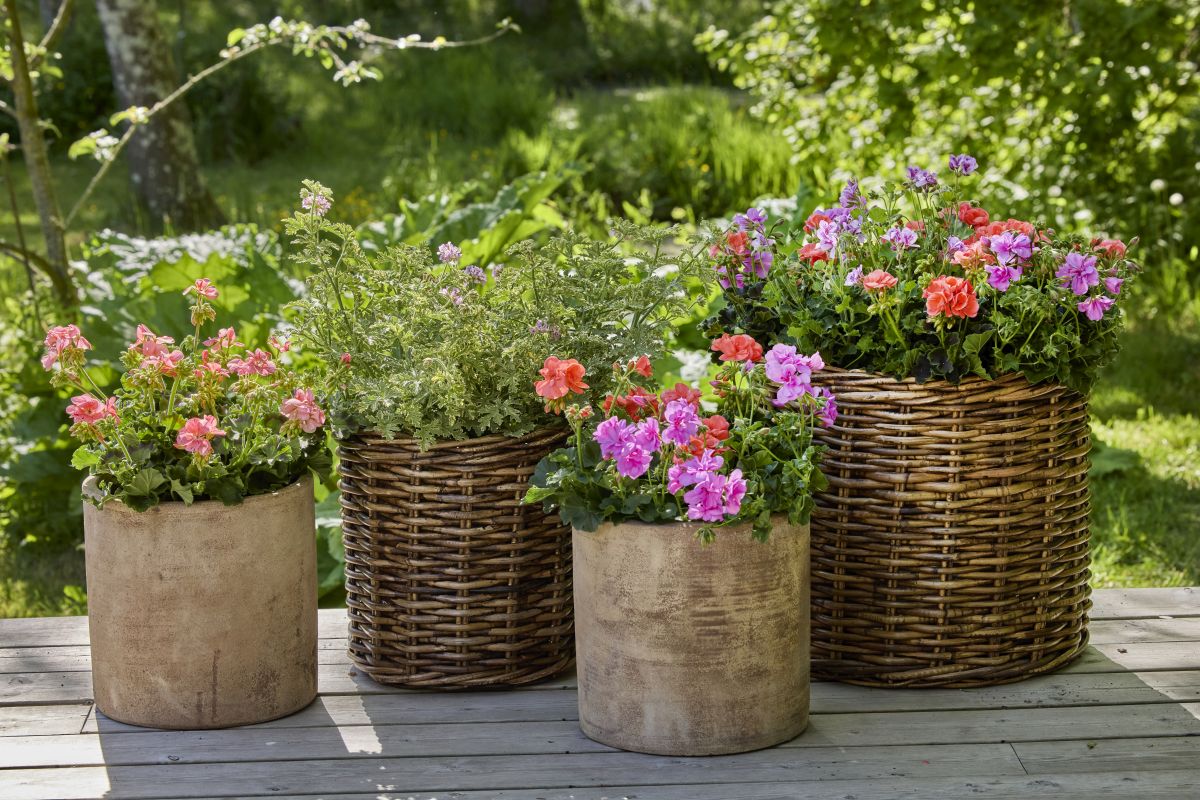
One big advantage is reliability in containers. Pelargoniums perform well in pots, hanging baskets, window boxes, and sheltered borders, which makes them a practical choice for many UK homes with limited garden space. They also offer a long flowering period when kept in good light and not overwatered, making them useful for summer displays that need to look good for months rather than weeks
Their relationship with climate change is also important. Garden commentary has increasingly highlighted pelargoniums as useful plants because they cope better with drought than many softer summer flowers, even though they are not hardy and still need protection from winter cold. That combination of toughness and tenderness is exactly why they suit the modern British gardener: easy in summer, but not truly all year outdoor plants.
There is also a cultural shift at work. Pelargoniums are increasingly associated with curated, decorative container gardening rather than just mass bedding. This makes them attractive to gardeners who want something a little more considered, whether that means a fragrant pot by the back door or a full display on a terrace. In that sense, the plant has moved from utility to style.
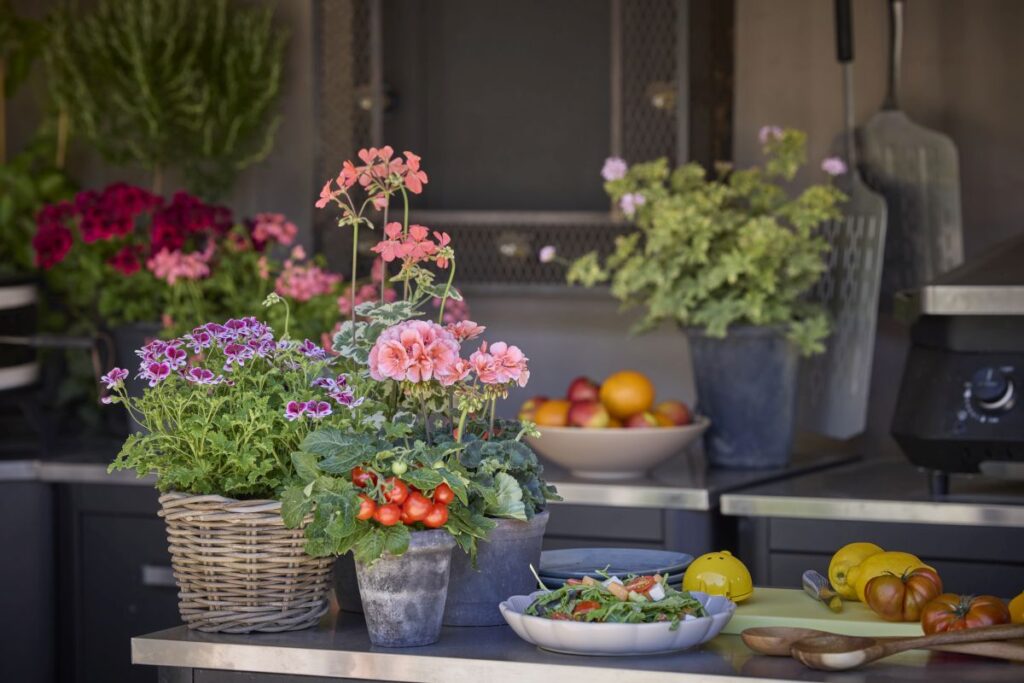
Pelargoniums are not one single look. They are a broad genus with several distinct groups that behave differently, which is part of their appeal and part of the confusion around them. The main cultivated groups commonly discussed are zonal, ivy leaved, regal, angel, unique, and scented leaved pelargoniums.
The zonal group is the one most people recognise first. It is upright and bushy, often with a dark marking or “zone” on the leaf, and it produces the classic round headed display of red, salmon, pink, or white flowers. For British gardeners wanting a dependable summer pot, it remains the backbone of the pelargonium world.
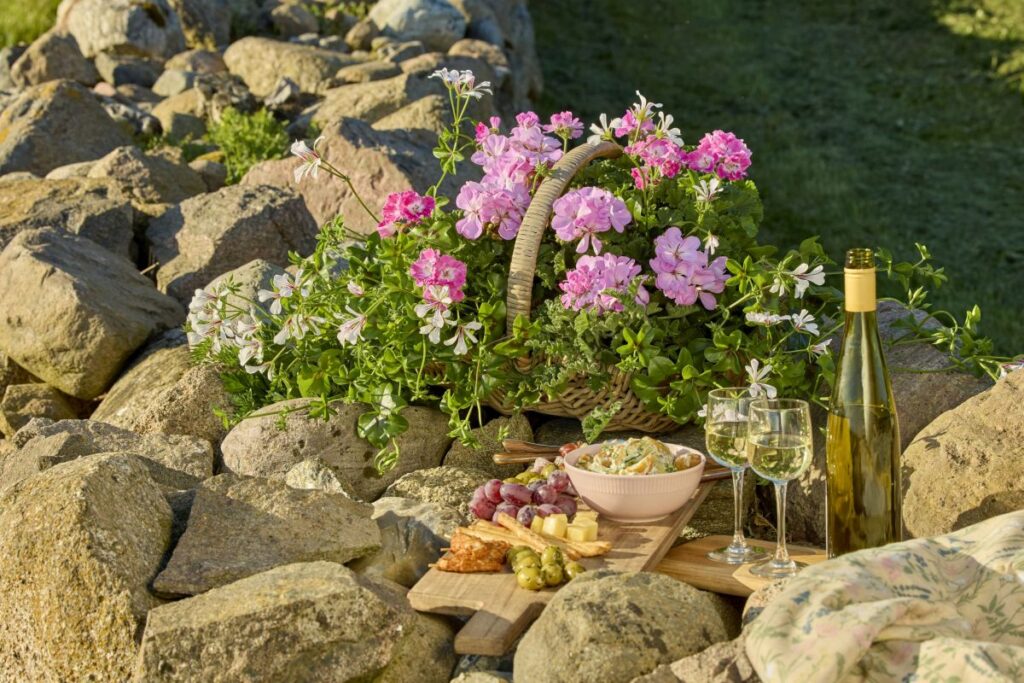
Ivy leaved pelargoniums behave differently because they trail rather than mound. That makes them especially good for baskets, balconies, and container edges where you want a softer spill over the sides. Regals, by contrast, are all about impact larger flowers, a more luxurious look, and a slightly more temperamental nature that suits sheltered spots.
Scented leaved pelargoniums deserve a special mention because they are one of the most interesting parts of the group. Their flowers may be small, but the leaves can smell of rose, lemon, cola, apple, orange, or other scents, giving them appeal even when they are not in peak bloom. That makes them useful for sensory gardens and for gardeners who like plants that offer something beyond visual colour.
These varieties are often grown as much for their foliage as for their flowers. A plant such as ‘Attar of Roses’ is valued for its rose fragrance, while other cultivars may suggest citrus or spice. This is why scented pelargoniums are often used near seating areas, doorways, and herb style plantings, where brushing the foliage releases the scent.
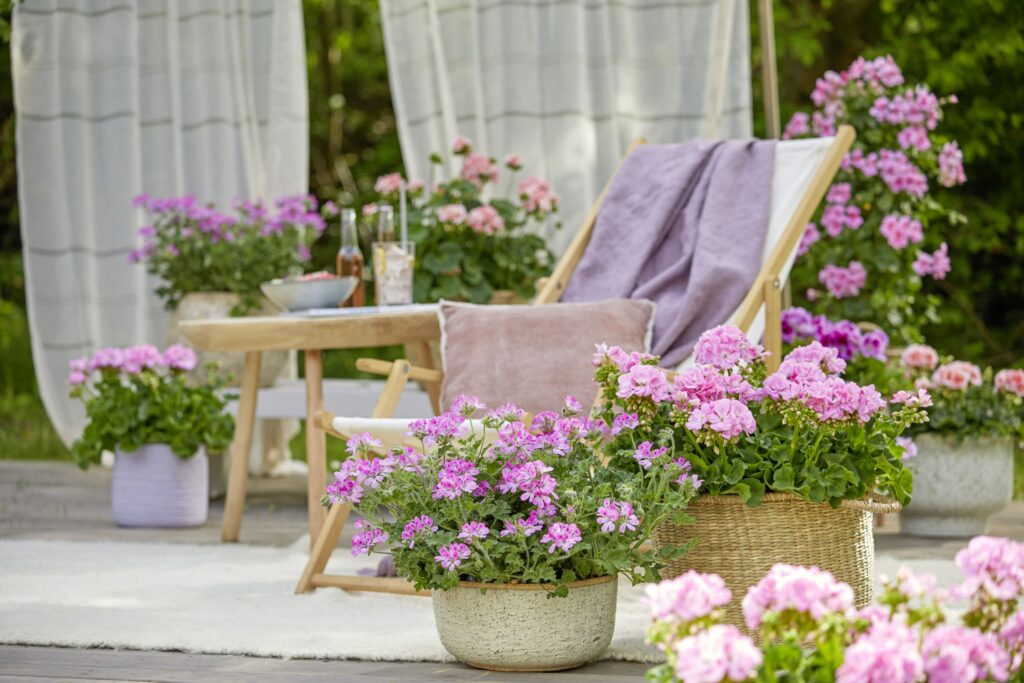
They also suit a more fashionable, collection, driven style of gardening. Rather than buying a single “geranium” for a summer display, many gardeners now choose several pelargoniums with different leaf textures and fragrances. That approach turns the plant into a feature, not just a filler.
The easiest way to understand pelargoniums is to look at both flower shape and growth habit. Their flowers are usually asymmetrical, with two upper petals and three lower petals, unlike true hardy geraniums, which have more regular, evenly arranged flowers. Pelargoniums are also tender, so they need winter protection in the UK, whereas hardy geraniums can stay outdoors year round.
Pelargoniums fit neatly into current UK garden style because they work well with containers, bold colour schemes, and weather aware planting. They also suit a more relaxed, portable style of gardening, where plants can be moved into sun, grouped for effect, and brought under cover before winter. In many homes, that flexibility matters more than planting a permanent border.
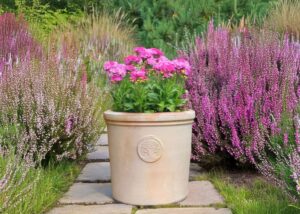
The modern pelargonium story is also about emotion as much as utility. They feel cheerful, familiar, and slightly nostalgic, but they can be used in a fresh way with terracotta pots, dark foliage, or a mix of scented and trailing types. That combination of memory and modernity is a big reason they keep returning to fashion.
Pelargoniums are trending in the UK because they answer several gardening needs at once: they are colourful, adaptable, manageable in containers, and well suited to hotter summers. Their many varieties also give gardeners room to choose between showy flowers, trailing forms, compact plants, and fragrant foliage.
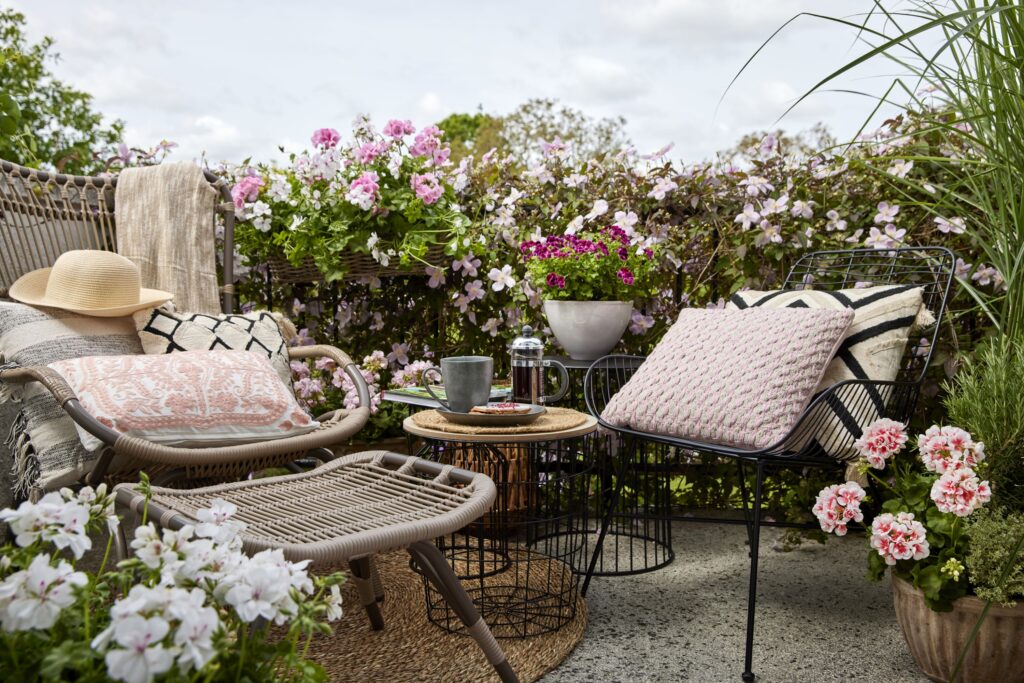
Images: Pelargonium for Europe