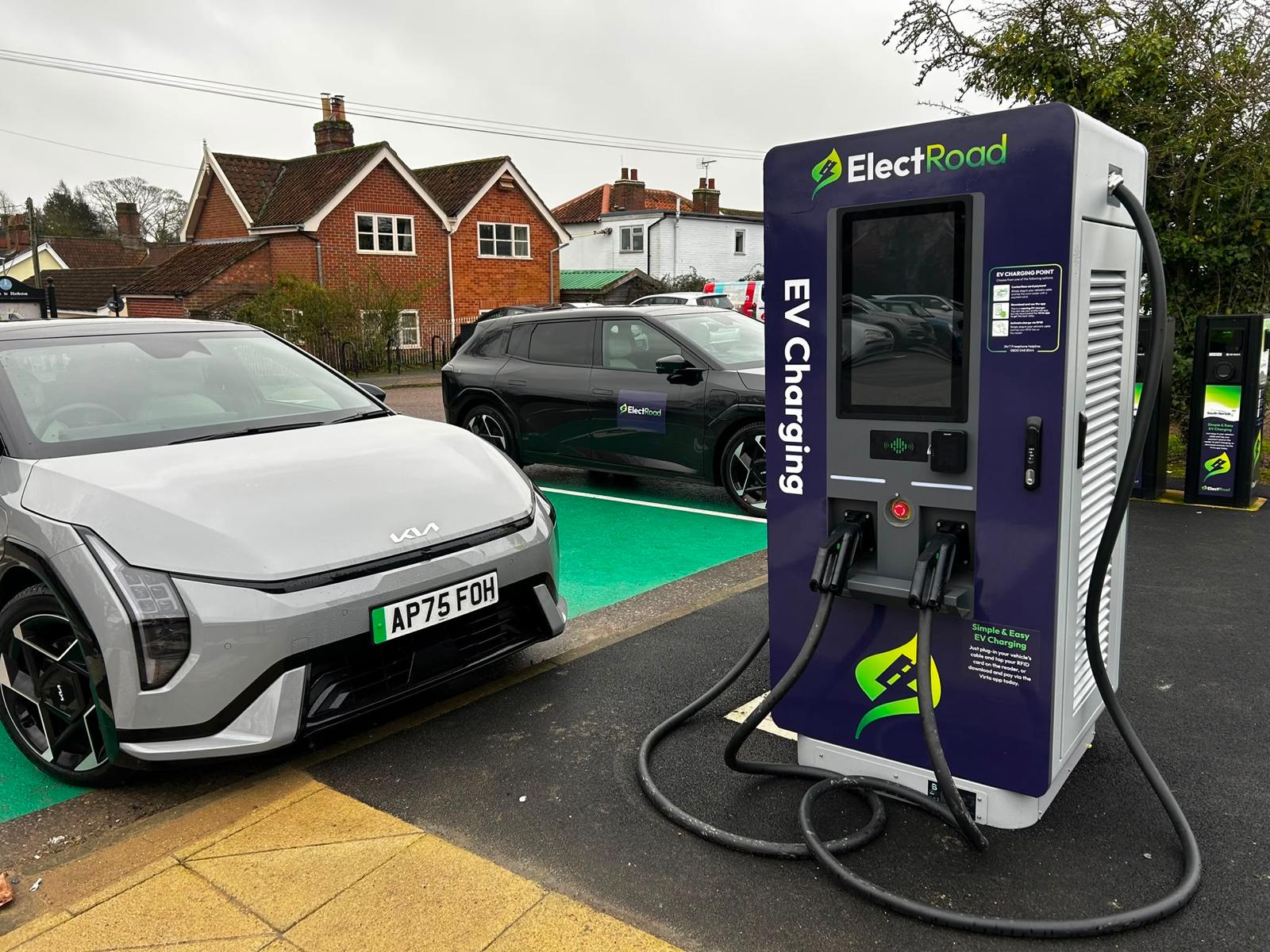
EV charging projections can quickly become dominated by national statistics, future adoption forecasts and assumptions about how frequently chargers might be used. ElectRoad believes retailers need something much simpler: a realistic assessment of whether charging works at their particular site.
One of the biggest barriers to investment in EV charging is not necessarily lack of interest. It is lack of confidence in the numbers.
Retailers may have seen charging propositions built around ambitious utilisation assumptions or predictions of how quickly electric vehicle ownership will grow. Understandably, that can make it difficult to separate a commercially viable opportunity from an optimistic forecast.
ElectRoad founder Richard Seppings believes destination retailers should expect a more evidence-led approach.“The question isn’t whether EV charging works somewhere,” he says. “The question is whether it works at your location, with your electricity costs, your customer profile and your likely utilisation.”
Location matters enormously in EV charging. A site close to a major route will behave differently from one serving predominantly local customers. A garden centre with a busy restaurant may present a different opportunity from a smaller retail site. Existing energy infrastructure, opening hours, local competition and the price drivers are asked to pay can all influence usage.
That is why ElectRoad advocates modelling different scenarios rather than working backwards from a single assumed number of daily charging sessions.
Its ROI modelling allows variables including charger cost, electricity cost, charging sessions and retail spend to be adjusted so that retailers can understand how changes in utilisation affect potential performance.
“If the business case only works when you assume an unrealistically high number of charging sessions from day one, that is something the retailer needs to know,” says Richard.
“We would rather have a sensible conversation about what the site needs to achieve and how utilisation might build over time.”
Destination charging also requires a broader calculation than the margin generated from electricity alone.
A charging driver may spend 45 to 75 minutes at the destination. At a garden centre, that creates the potential for a café visit, meal, retail purchase or simply exposure to a business they have not visited before.
ElectRoad’s own survey data suggests charging customers spend an average of £12.50 at the destination while their vehicle is charging, although Richard is clear that retailers should treat this as an indicator rather than assume every site will generate identical results.
The wider principle is more important: when assessing destination charging, the commercial return can include charging income alongside incremental retail activity.
“A service station understands that the value of a motorist isn’t limited to the fuel they buy,” Richard says. “Destination retailers need to apply the same thinking to charging — but they also need to be realistic about the evidence.”
The price of charging is another variable. ElectRoad agrees tariffs in partnership with the site host and considers factors including electricity costs, solar or battery contribution, local competition and national charging prices.
That flexibility matters because a destination retailer does not necessarily need to maximise the margin on every kilowatt hour.
Where charging also creates footfall and secondary spend, competitive charging prices can form part of the wider customer proposition.
It is another reason a charging business case cannot be reduced to a single universal formula.
Perhaps the most important part of viability modelling is accepting that some sites will not yet make sense.
ElectRoad says the performance data available across its operating network includes sites with different configurations and different return periods. Its current garden centre proposition references examples ranging from approximately 11 to 21 months, but site-specific performance depends on the underlying assumptions and operating conditions.
For Richard, this is exactly why retailers should insist on seeing the numbers behind a proposal.“EV charging has reached the point where the industry should be able to have mature commercial conversations,” he concludes.
“Not every site will be right today and not every site will perform in the same way. But where the location, energy and retail proposition come together, destination charging can create an additional revenue stream and bring customers through the gate. The important thing is to base that decision on data rather than enthusiasm.”